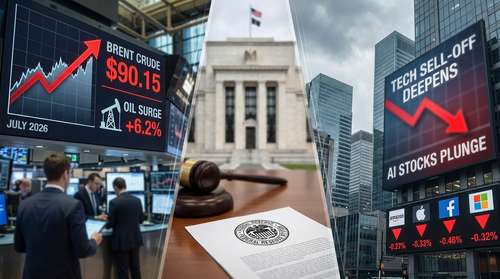

Global equity markets are facing a brutal reality check this Thursday morning following a dramatic escalation in Middle Eastern geopolitical tensions. President Trump's overnight address dashed any lingering ceasefire hopes by firmly pledging to hit Iran extremely hard over the next three weeks. The ensuing global market crash sent immediate shockwaves through trading floors from Tokyo to Wall Street, establishing a highly volatile environment for all business news breaking 2026.
How the Trump Iran Address 2026 Derails Economic Recovery
In a highly anticipated national broadcast, the administration pivoted sharply away from diplomatic negotiations. The Trump Iran address 2026 fundamentally altered international financial forecasts, triggering an aggressive flight to safety among major institutional investors. Analysts who had priced in a de-escalation are now scrambling to adjust their models as the prospect of prolonged military engagement becomes a certainty over the coming month.
The severity of the massive selloff was immediate and relentless across all major exchanges. Benchmark indices across Asia and Europe opened deep in the red, with the outright panic quickly bleeding into pre-market trading in the United States. Trillions of dollars in market capitalization have been wiped out within hours, as portfolio managers aggressively dump risk-on assets in favor of traditional safe havens like physical gold, the US dollar, and sovereign bonds. Retail investors are now facing a severe test of their resolve as standard investment portfolios bleed value.
Massive Oil Price Surge: Brent Crude Edges Toward $108
The most dramatic casualty of this intensifying rhetoric is the global energy sector. We are currently witnessing an unprecedented oil price surge that threatens to completely upend global supply chain logistics. In early Thursday trading, Brent crude oil prices catapulted more than 6%, surging aggressively toward the crucial $108 a barrel threshold.
Energy analysts point directly to the severe vulnerability of Middle Eastern supply routes. Institutional traders are rapidly abandoning short positions and heavily pricing in worst-case scenarios for crude supply disruptions. If energy infrastructure becomes a primary target during the promised three-week military strike window, the current price jump could be merely the beginning of a sustained upward trajectory that reshapes global energy dynamics.
The Strait of Hormuz Crisis Deepens
At the very center of this localized energy panic is an escalating Strait of Hormuz crisis. As roughly a fifth of the world's total daily oil consumption passes through this narrow maritime chokepoint, the explicit threat of intensified military strikes fundamentally alters global risk premiums. Shipping conglomerates are already rerouting fleets around the Cape of Good Hope, causing immediate spikes in freight and insurance costs. These cascading logistical expenses will inevitably trickle down to everyday consumers in the weeks ahead.
Institutional Response to the Warflation Economic Impact
This dual macro shock of tumbling equities and skyrocketing energy costs brings a dreaded economic dynamic back to the absolute forefront. The warflation economic impact threatens to entirely undo months of hard-fought central bank progress in controlling consumer inflation. Higher fuel and transportation costs inevitably bleed directly into heavy manufacturing, global agriculture, and local retail shelves, leaving central banks caught squarely between fighting sticky inflation and rescuing plummeting markets.
Recognizing the absolute severity of the situation, global financial institutions are mobilizing at an unprecedented pace to prevent widespread contagion. Early Thursday, the International Monetary Fund (IMF) and the World Bank announced the formal establishment of a joint emergency coordination group. Their stated mandate is to aggressively manage the international economic fallout and provide rapid liquidity lifelines to emerging markets that are exceptionally vulnerable to sudden energy shocks and capital flight.
Navigating Extreme Market Volatility
For mutual fund managers and individual retail traders alike, the financial landscape has shifted completely overnight. Technology, commercial airline, and consumer discretionary stocks are bearing the absolute brunt of the widespread selloff. Conversely, international defense contractors and legacy energy producers are seeing concentrated, aggressive inflows as capital seeks opportunistic safety.
The administration's explicit timeline of sustained military pressure over the upcoming three weeks creates a persistent, heavy cloud of uncertainty. As long as the heavy specter of broader regional conflict dictates the underlying pace of global trade, traditional market fundamentals will remain entirely overshadowed by geopolitical headlines. Investors are now aggressively bracing for a remarkably volatile April, keeping an exceptionally close watch on both ongoing military developments and the crucial interventions planned by the newly formed IMF and World Bank emergency task force.