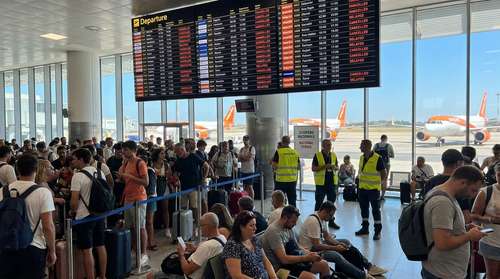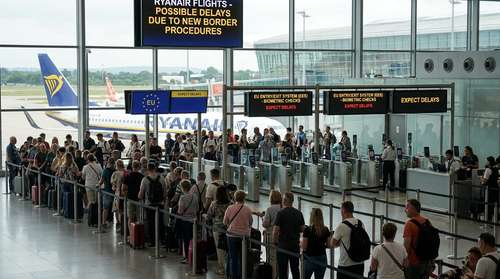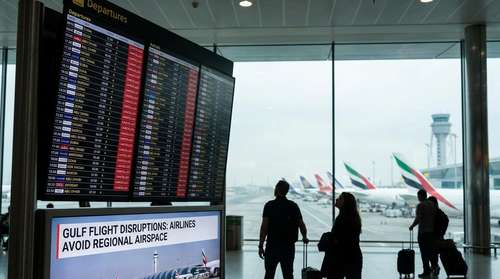
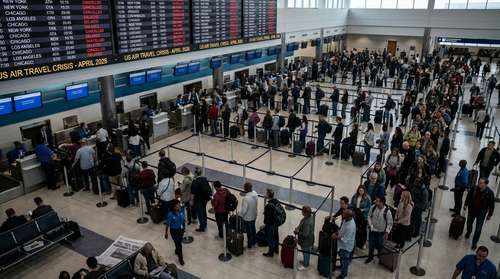
The US air travel crisis 2026 has officially reached a breaking point. A historic "perfect storm" converged on American airports this week, pitting a record-breaking spring break travel season against a 47-day federal government shutdown and an unprecedented global jet fuel shortage. With millions of passengers taking to the skies, the systemic breakdown is leaving travelers stranded in four-hour security lines at major hubs like Atlanta, JFK, and Houston, while airlines scramble to rewrite their flight schedules amid aggressively spiking operational costs.
The DHS Shutdown and TSA Airport Delays Today
The root of the immediate terminal congestion stems from the ongoing Department of Homeland Security (DHS) shutdown, which began on February 14. Over 50,000 Transportation Security Administration (TSA) employees have been working without pay for nearly two months. The severe financial strain has sparked mass resignations, with hundreds of officers walking off the job entirely since the lapse in funding began. Callout rates have reached a staggering 55% at some regional hubs like Houston's William P. Hobby Airport, leaving checkpoints severely understaffed.
If you are checking TSA airport delays today, the reality on the ground is grim. Wait times at major international airports have routinely exceeded three to four hours. Security programs meant to expedite the process, including TSA PreCheck and CLEAR, are facing rolling closures depending on daily staffing levels. Federal authorities have even taken the extraordinary step of deploying ICE agents to civilian checkpoints to assist overburdened screeners—a move that has further complicated the operational flow and drawn sharp criticism.
The Strait of Hormuz Aviation Impact and Fuel Shortages
While the terminals are gridlocked, the situation on the tarmac is equally volatile. The Strait of Hormuz aviation impact is rippling through the industry following the waterway's closure to maritime traffic in late February amidst US-Israeli and Iranian military conflicts. Because approximately 20% of global oil flows through this vital chokepoint, the disruption has starved refineries and drastically reduced jet fuel supplies.
This geopolitical standoff has triggered a massive jet fuel price hike 2026. Stateside, jet fuel prices have nearly doubled, rocketing from $2.50 to $4.88 per gallon in just over a month. Although a two-week ceasefire was announced on April 7, industry leaders warn it will take months for petroleum reserves and supply chains to restabilize. European markets are already facing systemic fuel collapse and implementing mandatory rationing, forcing international carriers to carry the burden of these compounded global shortages.
Capacity Cuts and Flight Cancellations April 2026
Airlines simply cannot absorb a near 100% increase in their largest operational expense. To protect margins and conserve tightening fuel stocks, carriers are aggressively scaling back. The current wave of flight cancellations April 2026 is not merely a staffing issue; it is a calculated financial defense.
Major US airlines, including Delta and United, have begun pulling back capacity, citing the impossible economics of burning highly expensive fuel on less profitable routes. Delta, for instance, has announced a capacity reduction of roughly 3.5% to preserve cash flow. Travelers are finding fewer rebooking options when their flights are axed, creating a domino effect of delays that stretches from coast to coast.
Fares Surge Amid a Spring Break Travel Record
This operational collapse is colliding directly with a massive surge in demand. Industry forecasts projected a spring break travel record this year, with an estimated 171 million passengers expected to fly between March 1 and April 30—a 4% increase from previous records.
With fewer planes in the sky and surviving flights operating at maximum capacity, the inevitable result is a sharp airline ticket price surge. Last-minute deals have entirely vanished. To offset the soaring fuel costs, domestic carriers have uniformly hiked base fares and increased checked baggage fees. Passengers are now paying a premium for a travel experience marred by extensive delays and the looming threat of sudden cancellations.
How Travelers Can Navigate the Current Meltdown
Navigating the skies right now requires patience and aggressive proactive planning. If you are scheduled to fly within the next few weeks, consider these strategies to protect your trip:
- Arrive Excessively Early: The standard two-hour window is no longer sufficient. Arrive at least three to four hours prior to domestic departures, especially at major hubs experiencing severe security bottlenecks.
- Monitor Security Lanes: Do not assume TSA PreCheck will be open. Staffing fluctuates daily, and expedited lanes are frequently the first to be closed or consolidated.
- Pack Light: With airlines hiking checked bag fees to offset fuel costs, traveling with just a carry-on can save money and prevent lost luggage during sudden rebookings.
- Check Flight Status Religiously: Track your inbound aircraft via airline apps before heading to the airport to stay ahead of rolling cancellations.
The convergence of geopolitical energy crises and domestic political stalemates has left the US aviation sector navigating uncharted airspace. Until Congress resolves the DHS funding gap and Middle Eastern crude oil shipments fully resume, American travelers will continue to bear the brunt of this historic turbulence.