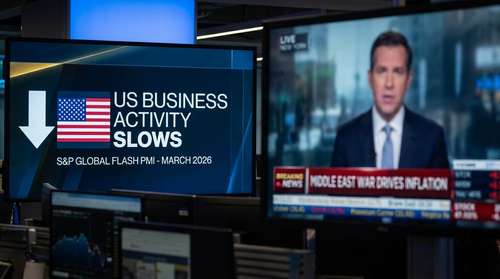
The U.S. economy is showing visible signs of strain as geopolitical turmoil takes its toll on domestic demand. According to the latest S&P Global Flash PMI March 2026 report, private sector output has slumped to its lowest level in nearly a year. The culprit is increasingly clear: a rapidly escalating conflict in the Middle East that is driving up energy costs and shaking consumer confidence to its core.
The highly anticipated Purchasing Managers Index news delivered a sobering reality check for Wall Street this week. The headline U.S. Composite PMI Output Index dropped to 51.4 in March, down from 51.9 in February. While any reading above 50 still indicates expansion, this marks the weakest pace of growth since April 2025 and rounds out the most sluggish quarter for the American economy since late 2023. Behind the headline number lies a stark divergence between a resilient industrial base and a rapidly cooling consumer landscape.
Middle East War Economic Impact: The Services Sector Squeeze
The primary driver of the current US business activity slowdown is a noticeable pullback in the critical services sector. Activity here grew at the weakest pace in 11 months, with the services PMI sliding to 51.1 against expectations of 51.7. Service providers are facing a brutal combination of retreating clientele and soaring overhead.
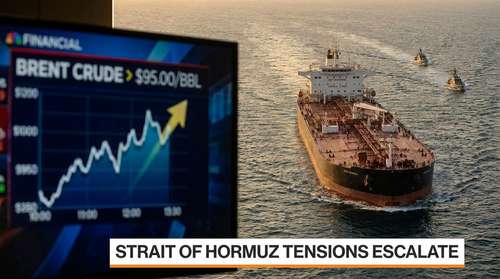
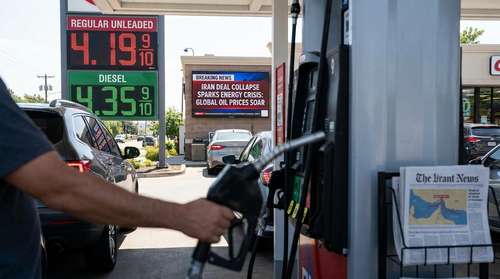
A major element of the Middle East war economic impact is the immediate shock to global energy markets. With the closure of the Strait of Hormuz severely restricting international shipping and oil exports, Brent crude prices surged past $110 per barrel earlier this month. This energy shock is bleeding directly into domestic operations. Service companies are reporting the sharpest rise in average input costs in ten months, forcing them to hike their own selling prices at the steepest rate since August 2022.
Faced with this mounting pressure, consumers are simply stepping back. The broader US services sector decline is characterized by a steep drop in new export sales and hesitation from domestic clients unwilling to commit to new contracts in such an unpredictable environment. Consequently, service firms have begun trimming their headcounts to rein in costs, leading to the first overall contraction in private sector employment in more than a year.
Manufacturing: A Rare Bright Spot Amidst the Slowdown
While services contract, American factories are telling a very different story. The manufacturing sector emerged as a surprising outlier in March, with its specific PMI climbing from 51.6 to a robust 52.4. This marks the eighth consecutive month of improving factory business conditions.
However, this factory boom is not necessarily built on organic consumer demand. Instead, manufacturers are accelerating production and stockpiling raw materials in a defensive maneuver against impending supply chain chaos. Anticipating severe logistics delays due to maritime blockades in the Persian Gulf and the Red Sea, purchasing managers are rushing to build safety inventories and lock in material prices before shortages worsen.
Supply Chain Bottlenecks Return
The scramble to secure materials has predictably overwhelmed logistics networks. Supplier delivery times have lengthened to a degree not witnessed since the supply chain crisis of October 2022. While these elongated delivery times technically boost the headline manufacturing PMI formula, they reflect deep structural friction rather than pure economic health. Factories are essentially borrowing future demand to shield themselves from today's geopolitical volatility.
Stagflation Risks and the 2026 Economic Forecast
The collision of a US business activity slowdown with surging input costs is ringing alarm bells for economists monitoring the 2026 economic forecast. S&P Global Market Intelligence's chief business economist explicitly highlighted the growing risk of the United States slipping into stagflation.
Current PMI data suggests that the American gross domestic product is expanding at an anemic annualized rate of just 1.0% to 1.3% for the first quarter. Simultaneously, the survey's internal price gauges hint that headline consumer price inflation could soon accelerate back toward the 4% threshold. The dangerous mix of rising inflation and oil prices against a backdrop of stagnating growth presents a formidable challenge for policymakers.
What This Means for the Federal Reserve
For the Federal Reserve, the March PMI report complicates an already precarious tightrope walk. Central bankers must now juggle intensifying upside risks to inflation against the genuine threat of an economy losing its fundamental growth momentum. A stronger-than-expected inflation resurgence, fueled by the Middle East crisis, would normally demand higher interest rates. Yet, further rate hikes risk suffocating a services sector that is already shedding jobs and struggling to maintain consumer demand.
As the international community watches the unfolding situation overseas, domestic markets are bracing for extended turbulence. The resilience of the American consumer has anchored the economy through recent years, but sustained energy shocks and geopolitical instability are testing that endurance to its absolute limits. Investors and businesses alike will be scrutinizing upcoming Personal Consumption Expenditures (PCE) data to gauge exactly how much of this cost burden has officially reached the household level.