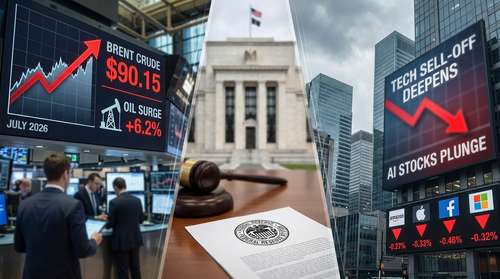

In the most consequential stock market news today, Wall Street experienced a massive relief rally following indications that the White House may be looking for an exit strategy in the Middle East. President Donald Trump has reportedly signaled a willingness to conclude the five-week-old military campaign against Iran. Yet, while traders celebrate the Trump Iran de-escalation prospects, Main Street is grappling with a severe Iran war economic impact: the national average for a gallon of gasoline has officially breached the $4 threshold for the first time since August 2022.
Wall Street Recovery News: Indexes Post Massive Gains
The prospect of an end to the conflict sent equities soaring on Tuesday afternoon. The much-anticipated S&P 500 rally March 2026 materialized with stunning force, as the benchmark index advanced 2.9% to close at 6,528.99. Tech stocks led the charge, propelling the Nasdaq Composite up an impressive 3.8%, while the Dow Jones Industrial Average added nearly 1,100 points, or 2.5%.
This Wall Street recovery news comes as a welcome reprieve for investors who have endured weeks of extreme volatility. Throughout March, markets have been hyper-focused on the escalating geopolitical tensions and the resulting threat to global energy supplies. The sudden pivot in market sentiment reflects just how desperate institutional traders are for a swift resolution. Michael O'Rourke, chief market strategist at Jones Trading, noted that the equity market bounced significantly as oil prices began to pull back, predicting that equities will sustain the rally as long as oil continues its correction.
Changing Tides in the Middle East
According to recent reports, President Trump told aides he would be open to ending the military operations, even if the critical Strait of Hormuz remains largely obstructed. The ongoing Strait of Hormuz oil crisis has functionally sidelined more than 12 million barrels of oil equivalent per day, forcing global markets into a defensive crouch.
While the White House renewed threats to target Iran's water and energy infrastructure if no diplomatic agreement is reached, the rhetoric from both sides appears to be shifting toward diplomacy. Iranian state TV broadcast statements citing President Masoud Pezeshkian, suggesting Tehran is prepared to end the hostilities provided specific security guarantees are met. For equity markets, this potential opening for negotiation was enough to trigger a massive influx of buy orders.
Consumer Squeeze: US Gas Prices Hit $4 Gallon
Despite the euphoria on trading floors, the reality for everyday Americans remains punishing. The national average fuel price spiked to roughly $4.02 on Tuesday, capping an extraordinary surge from $2.98 just one month prior. Hitting the US gas prices $4 gallon milestone represents the steepest monthly price acceleration ever recorded by fuel tracking services.
Patrick De Haan, head of petroleum analysis at GasBuddy, warned that breaching the $4 national average represents crossing a major "psychological wall" for American consumers. The pain is significantly more acute in specific regions. Drivers in California are currently facing averages near $5.89 per gallon, while Washington state averages hover around $5.35. The spike is driven entirely by the cost of crude oil, which has spiked over 35% since the commencement of military action.
Commercial Transport Feels the Burn
It isn't just passenger vehicles bearing the brunt of the shock. The nationwide average for diesel fuel reached an unprecedented $5.45 per gallon on Tuesday. Because diesel powers the majority of the domestic supply chain—from commercial trucking to agricultural equipment—these elevated transportation costs are widely expected to bleed into consumer goods. Analysts warn that this could reignite inflationary pressures across the broader economy, complicating the Federal Reserve's long-term rate strategy.
The Broader Economic Outlook
Energy markets remain highly sensitive to daily developments. While global benchmarks like Brent crude edged down slightly to around $104 a barrel following the de-escalation reports, prices remain heavily elevated compared to early 2026 norms. Commodity specialists note that a $10 increment in the per-barrel price of crude oil typically lifts gas prices by 10 to 15 cents per gallon, keeping household budgets under intense pressure.
A swift return to pre-war oil prices is highly unlikely, as the logistical damage to shipping routes and regional infrastructure will take considerable time to bypass or repair. For now, the juxtaposition between soaring equities and surging living costs paints a complicated picture of the American economy. Investors are betting heavily that the worst of the geopolitical storm has passed. However, until crude oil flows completely normalize and the pumps reflect those changes, American households will continue to finance the geopolitical premium with every trip to the gas station.