For the first time in over a year, American border towns and major vacation destinations are breathing a collective sigh of relief. Following 15 consecutive months of steep declines, the number of Canadian visitors heading south has finally ticked upward. Recent data released this week indicates a modest but significant 1.4% increase in Canadian arrivals in April 2026, signaling that the viral Canada US travel boycott may finally be showing signs of stabilizing. While the road to full recovery is long, this shift offers a vital glimmer of hope for an industry that has weathered billions in lost revenue.
First Glimmer of Hope for US Canada Tourism Recovery
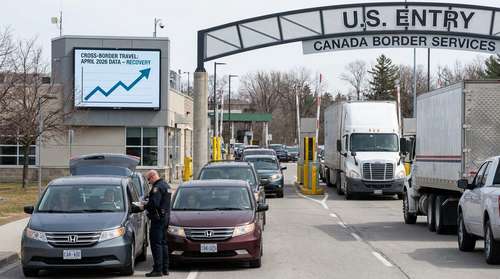
Statistics Canada data released on May 11, 2026, confirmed that 1.8 million Canadian residents made the trip to the United States last month. This marks the first year-over-year growth since the start of 2025, when political rhetoric and newly imposed trade tariffs sparked a widespread movement among northern travelers to stay home.
The sudden halt in visitations disrupted decades of established travel patterns. Historically, Canadians have comprised the single largest cohort of inbound tourists to the U.S., making up roughly a quarter of all foreign visitors. The recent April uptick suggests that the initial shock of those geopolitical tensions might be wearing off for certain demographics, laying the groundwork for a slow US Canada tourism recovery.
Analyzing the Latest Cross-Border Travel Statistics
A closer look at the cross-border travel statistics reveals that the 1.4% overall increase is highly nuanced. The shift in travel methods highlights changing visitor habits:
- Vehicle Traffic: Car return trips jumped 5.8% as weekend road-trippers returned to border states.
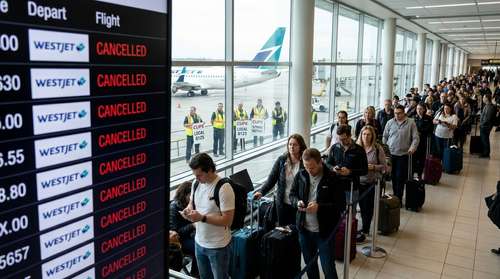
- Aviation Declines: Conversely, air travel continued its downward trajectory, falling by 8.1% in April.
- Long-Term Deficits: Despite the positive monthly bump, overall cross-border traffic remains approximately 26% below the baseline established in 2024.
The reality on the ground may be even more stark in certain regions. According to comprehensive cellphone data analyzed by researchers at the University of Toronto's School of Cities, the actual drop in visits to major American metro areas over the past year reached a staggering 42%. The research showed that business hubs like San Francisco and New York suffered just as much as traditional sunbelt escapes in Florida and South Carolina.
The Tourism Economic Impact NY and Border Communities Face
The financial toll of the past 15 months has been devastating for regions that rely heavily on northern visitors. The severe tourism economic impact NY experienced last year serves as a prime example of this widespread disruption. Travel from Canada to New York state plummeted by more than 21%, triggering a 2% decline in travel-related employment across the state.
Specific regional economies were hit particularly hard. The Regional Office of Sustainable Tourism for the Adirondack Mountains reported revenue losses of roughly $14 million. Meanwhile, the broader national economy absorbed a massive hit. Estimates calculate that the sharp drop in visitation cost the U.S. hospitality sector upwards of $4.5 billion and impacted thousands of jobs across the country.
A Generational Divide in US Border Travel Trends
Interestingly, the evolving US border travel trends indicate that the current landscape is largely defined by a stark generational divide. Recent survey data from the Travel Health Insurance Association of Canada (THIA) reveals that younger travelers are significantly more willing to cross the border compared to their older counterparts.
While older generations remain steadfast in their avoidance of American destinations—with only 8% of Boomers planning trips south—nearly 61% of Gen Z travelers indicated the U.S. is on their itinerary this year. This younger demographic appears less deterred by the geopolitical tensions that initially sparked the movement. For tourism boards struggling to market their cities, targeting these younger cohorts may be the most effective strategy to boost numbers in the short term.
Will Canadian Tourists in USA 2026 Keep Growing?
As the summer season approaches, the pressing question is whether the volume of Canadian tourists in USA 2026 will continue to build momentum. The U.S. Travel Association's latest forecast projects a modest 6.4% year-over-year growth for the remainder of 2026, banking on a steady, incremental return to pre-boycott levels by 2030.
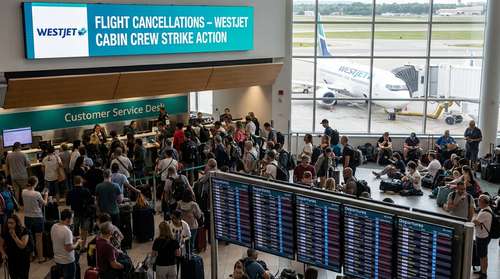
However, industry experts caution that a single positive month does not erase a structural shift in travel behavior. The long-term effects of the geopolitical friction have already forced the aviation sector to adapt. Major carriers like WestJet and Air Canada have reallocated significant capacity toward European and Caribbean routes, meaning the airlift required for a rapid recovery simply is not available right now.
For destination marketing organizations and local businesses, the April data provides a crucial narrative shift from continuous loss to tentative stabilization. For readers tracking the latest updates on this dynamic, newsvot travel news will continue monitoring the border data closely to see if this spring's glimmer of hope translates into sustained growth throughout the rest of the year.