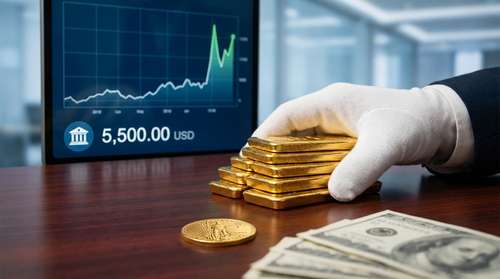
International gold prices surged past the unprecedented $5,500 per ounce mark on Thursday, January 29, 2026, cementing the largest single-day rally since 2020. The precious metal touched an intraday high of $5,542.29, driven by a massive capital flight from U.S. assets dubbed the "Sell America" trade. As investors flee the U.S. dollar and sovereign bonds in favor of hard assets, the global financial landscape is undergoing a seismic shift.
The 'Sell America' Trade Explained
The catalyst for this historic rally is the accelerating "Sell America" phenomenon—a widespread rotation where global investors are aggressively reducing exposure to U.S. equities, Treasuries, and the greenback. This trend has gained traction following a week of geopolitical and domestic turbulence that has shaken confidence in U.S. institutional stability.
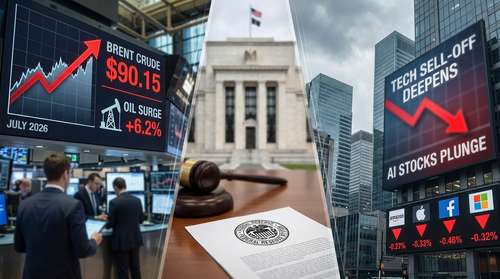
Market analysts point to a "perfect storm" of triggers. Tensions escalated earlier this week after reports surfaced of a Department of Justice investigation into Federal Reserve Chair Jerome Powell, a move interpreted by markets as an attempt to erode central bank independence. Simultaneously, renewed tariff threats and diplomatic friction over Greenland have strained U.S.-Europe relations, prompting foreign capital to seek neutral ground.
"We are witnessing a revaluation of sovereign risk," said Nigel Green, a leading market strategist. "The 'Sell America' trade is no longer just a hedge; it is a defensive strategy against policy unpredictability. Money is moving out of the dollar and into assets that have no counterparty risk, with gold being the primary beneficiary."
Central Banks accelerate Gold Buying Spree
While private investors are chasing momentum, central banks continue to provide the bedrock for this rally. Verified data confirms that monetary authorities in emerging markets are buying bullion at a record pace to diversify their reserves away from the U.S. dollar.
Recent reports indicate that the National Bank of Poland and the Central Bank of Brazil have added substantial tonnage to their holdings in January alone. They are joined by consistent buying from China and Uzbekistan, creating a sustained demand shock that supply cannot match. This official sector demand is less price-sensitive than retail buying, effectively putting a floor under the gold price even as it climbs to dizzying heights.
"Central banks are signaling that they view gold as the ultimate neutral store of value in a fragmented world," noted a senior commodities analyst at Goldman Sachs. "With the dollar's share of global reserves falling to multi-decade lows, the rotation into gold is structural, not just cyclical."
Silver Joins the Rally: Breaking $100
Gold is not the only metal benefitting from the safe-haven rush. Silver prices have skyrocketed, topping $100 per ounce for the first time in history. The grey metal is outperforming gold in percentage terms, driven by both industrial demand and its role as a leveraged proxy for gold investment.
Mining stocks have surged in tandem with the metals. Major producers like Newmont Corp. and Barrick Gold saw their share prices leap in early trading, as margins expand significantly with gold above $5,000. For the mining sector, these prices represent a windfall that could lead to record dividends and intensified exploration activity.
Outlook: Is $6,000 Next?
With the psychological barrier of $5,500 broken, attention has turned to the next resistance levels. Technical analysis suggests that with the U.S. dollar index dipping to a four-month low and 10-year Treasury yields pushing 4.3% as bonds sell off, the path of least resistance for gold remains higher.
Bank of America analysts have revised their 2026 forecast, suggesting that if the "Sell America" dynamic persists, gold could test $6,000 per ounce by the second quarter. However, experts warn of potential volatility. If U.S. political tensions ease or the Federal Reserve signals a staunch defense of the currency, a sharp correction could follow this parabolic move.
For now, however, the message from the market is clear: in an environment of deepening U.S. fiscal deficits and geopolitical instability, gold has reclaimed its throne as the premier global asset.