The highly anticipated Spring Break travel 2026 season has officially collided with Washington gridlock, sparking unprecedented chaos at terminals nationwide. As millions of vacationers head to the airports, a partial government shutdown impacting the Department of Homeland Security (DHS) has left TSA checkpoints severely understaffed. With security officers missing their first full paychecks this weekend, travelers are experiencing brutal delays, missed connections, and mounting frustration. If you are flying this week, checking TSA wait times today is no longer just a casual recommendation—it is an absolute necessity to avoid having your vacation derailed by massive airport delays March 2026.
The Government Shutdown Travel Impact on Major Hubs
The root of this massive logistical failure stems from a funding stalemate that began on February 14, 2026. Lawmakers have been unable to pass a budget for the DHS due to fierce partisan disputes over immigration enforcement and border patrol funding. While politicians bicker on Capitol Hill, the real-world government shutdown travel impact is unfolding dramatically at security checkpoints across the country. Families looking forward to their Spring Break travel 2026 are instead finding themselves caught in the political crossfire.
By law, Transportation Security Administration officers are deemed essential and are required to work without pay during federal funding lapses. However, morale has predictably plummeted. Friday, March 13, marked the first official $0 paycheck for roughly 50,000 screeners. Consequently, absence rates have more than doubled, and more than 300 TSA officers have reportedly quit altogether since the shutdown began. The officers who remain are spread dangerously thin, tasked with screening what Airlines for America projects to be a record-breaking 171 million passengers this spring season. This devastating government shutdown travel impact is leaving airports scrambling to manage the unprecedented crowds.
U.S. Airport Security Lines Reach a Breaking Point
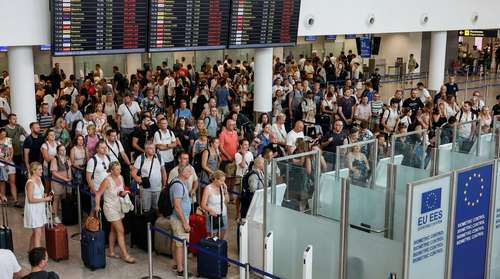
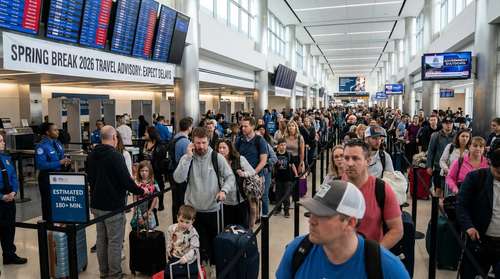
The most visible symptom of this crisis is the staggering length of U.S. airport security lines. At Houston's William P. Hobby Airport, security waits topped three hours earlier this week, with the queue snaking out of the terminal and directly into the parking garage. Louis Armstrong New Orleans International Airport reported lines exceeding two hours, prompting airport officials to take to social media to blame the federal funding lapse directly for the severe shortage of checkpoint workers. If you are wondering about TSA wait times today, you can expect similarly bloated U.S. airport security lines at your local departure hub.
Major transit centers like Atlanta's Hartsfield-Jackson and Chicago O'Hare are also warning passengers of severe bottlenecks. The TSA itself has taken the unusual step of broadcasting video messages at checkpoints nationwide. The videos warn travelers of extended waits, controversially cite a "Democrat shutdown," and plead with passengers to show patience and respect. Disturbingly, Acting Deputy Administrator Adam Stahl noted that physical and verbal assaults on TSA officers have spiked since the crisis began, further complicating an already volatile environment. These hostile conditions are exacerbating the airport delays March 2026 is quickly becoming infamous for.
Flight Cancellations Spring Break: A Ripple Effect
When security lines back up for hours, the logistical dominoes begin to fall. The current checkpoint gridlock is actively contributing to missed flights and disrupted itineraries, acting as a catalyst for flight cancellations Spring Break travelers desperately want to avoid. While weather and mechanical issues typically drive flight cancellations Spring Break, the sheer volume of delayed passengers means airlines are flying half-empty planes while thousands of ticketed customers remain stranded at X-ray machines.
Airlines cannot simply hold flights indefinitely for passengers stuck in security. Once a traveler misses their scheduled departure, rebooking during the peak Spring Break travel 2026 rush becomes nearly impossible. Industry experts note that standard travel insurance often will not cover missed flights due to TSA delays, leaving vacationers entirely on the hook for expensive rebooking fees or lost vacation days.
How to Navigate the Checkpoint Chaos
Despite the grim outlook, savvy travelers can take proactive steps to survive the terminal gridlock and mitigate airport delays March 2026. First, utilize expedited screening programs if you have them. TSA PreCheck and Clear lanes remain open, though their speeds are also affected by the broader staffing shortages. Monitoring TSA wait times today via your airport's official social media feeds can give you a crucial head start.
Second, ensure your documentation is perfect. Airports like Harry Reid International in Las Vegas have warned that failing to bring a REAL ID or valid passport now requires a time-consuming TSA identity verification process and a $45 fee, adding agonizing delays to your trip. With U.S. airport security lines already stretched to the limit, a simple ID error could cost you your flight.
Urgent Travel Advisory 2026: Arrive Earlier Than Ever
Given the unprecedented combination of record passenger volume and an unpaid federal workforce, aviation authorities have issued a stark travel advisory 2026: the old rule of arriving two hours early is dead. For domestic flights, airports are now urging passengers to arrive a minimum of three to four hours prior to departure. If you are flying out of a major vacation hub or traveling internationally, the latest travel advisory 2026 recommends arriving up to five hours early to ensure you make it to your gate.
Until Congress reaches an agreement to restore DHS funding, the burden of this political stalemate will be carried by everyday Americans trying to enjoy their time off. Keep a close eye on your airline's app, verify TSA wait times today before you leave the house, and pack an extra dose of patience before heading out for your Spring Break travel 2026.