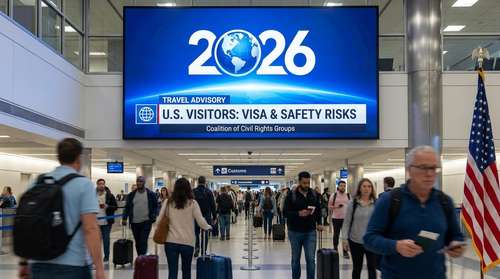
With the World Cup 50 day countdown officially underway, an unprecedented shadow has been cast over soccer’s biggest global celebration. A formidable coalition of over 120 civil society organizations—anchored by the American Civil Liberties Union (ACLU), Amnesty International USA, and the NAACP—has issued a stark 2026 World Cup travel advisory. The sweeping notice warns fans, players, and journalists preparing for international travel to USA host cities of serious rights violations, arbitrary detention, and targeted deportations.
The 2026 tournament, jointly hosted by the United States, Canada, and Mexico, is expected to draw upwards of 10 million visitors. While Canada and Mexico are preparing for their share of the 104 total matches, the United States will host the lion's share—78 matches across 11 major metropolitan areas, culminating in the July 19 final in New Jersey. Yet, as excitement builds, this unprecedented human rights warning threatens to significantly depress international turnout and alter the economic projections of American host cities.
The Driving Forces Behind the US Travel Warning ACLU Mandate
The coalition, acting under the banner of Dignity 2026, released the advisory to address severe concerns regarding aggressive federal border enforcement and sweeping immigration crackdowns. For millions of international fans, the reality of attending matches involves navigating a volatile legal and political landscape.
The core of the US travel warning ACLU and its partners outlined involves systemic threats to marginalized communities. Human rights advocates argue that visitors from immigrant backgrounds, ethnic minorities, and LGBTQ+ individuals face disproportionate risks of profiling and harassment from local law enforcement and federal agents. Transgender and nonbinary travelers, for example, have been explicitly warned of potential detention or denial of entry if their current gender presentation does not match the sex assigned at birth on their official travel documents.
Furthermore, the advisory highlights the aggressive tactics deployed at American points of entry, including mandatory social media screenings and warrantless searches of electronic devices. To ensure World Cup 2026 fan safety, advocacy groups are urging visitors to disable facial recognition and fingerprint passcodes on their phones and laptops before crossing the border.
How US Visa Restrictions 2026 Will Shape the Crowds
The tournament’s expansion to 48 teams was designed to create the most inclusive global sporting event in history. However, severe US visa restrictions 2026 threaten to lock out thousands of legitimate ticket holders. Federal policies have recently expanded strict travel bans to 39 countries, entirely freezing the issuance of standard B1/B2 tourist visas for citizens of 19 nations.
This diplomatic freeze directly impacts four nations that have successfully qualified for the tournament: Iran, Haiti, Senegal, and Côte d'Ivoire. While the State Department has offered narrow waivers for competing athletes and their essential coaching staff, regular supporters remain completely excluded from the exception. Those attempting to organize international travel must also contend with the State Department's newly expanded Visa Bond Pilot Program, which can require temporary visitors to post refundable bonds of up to $15,000 just to secure entry.
Local officials in host cities like Atlanta, Philadelphia, and Seattle have privately expressed concerns that these harsh entry requirements will choke off vital tourism revenue. The financial barriers combined with the genuine fear of arbitrary deportation are creating a chilling effect among global diaspora communities who traditionally drive the vibrant atmosphere of World Cup matches.
Clashing Over FIFA World Cup Immigration Policies
The release of this 2026 World Cup travel advisory has sparked immediate pushback from tourism boards and political figures. Geoff Freeman, CEO of the U.S. Travel Association, strongly condemned the coalition's warning, labeling it a political tactic and an act of sabotage designed to inflict economic harm on the hospitality sector.
Simultaneously, human rights leaders have directed their frustration at the sport's global governing body. Jamil Dakwar, director of the ACLU's human rights program, accused the organization of prioritizing relationships with the White House over the well-being of the fans. In response to the growing backlash against FIFA World Cup immigration policies, FIFA released a statement reiterating its commitment to internationally recognized human rights, pointing to the formation of a special advisory group of independent experts. Yet, critics argue these are mere administrative gestures lacking binding, concrete guarantees for the safety of foreign nationals.
Preparing for the Matches: Essential Fan Safety Protocols
As the June 11 kickoff approaches, the coalition advises anyone planning to attend matches across the United States to establish rigorous emergency contingency plans. Recommended measures include securing legal representation contacts prior to departure, consistently sharing location data and itineraries with trusted family members back home, and utilizing human rights monitoring applications like the ReadyNow! app in case of sudden detention.
This global spectacle was meant to showcase North American unity and a shared love for the beautiful game. Instead, the persistent threat of ICE enforcement and arbitrary border denials is forcing global soccer enthusiasts to carefully weigh their passion for the sport against the very real, documented risks of stepping onto American soil.