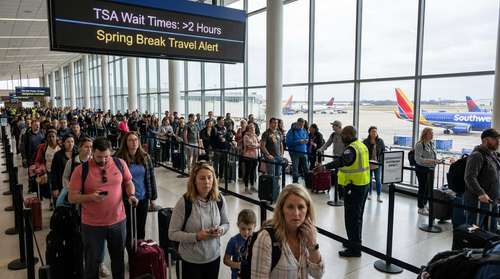
The convergence of a historic political stalemate and unprecedented passenger volumes has pushed the American aviation system to its absolute limits. As an estimated 171 million vacationers take to the skies this April, the spring break travel 2026 chaos is officially underway. A brutal 47-day partial Department of Homeland Security (DHS) shutdown has left 50,000 essential screening officers without reliable paychecks since mid-February. The resulting walkouts and resignations have created a major US airport staffing crisis, forcing travelers to endure security lines stretching up to four hours at critical transit hubs.
The Breaking Point: Inside the Major US Airport Staffing Crisis
The roots of this operational meltdown trace back to February 14, when congressional funding for the DHS abruptly lapsed. For nearly seven weeks, tens of thousands of Transportation Security Administration officers have been mandated to report to the checkpoints without pay. The financial strain on these essential workers has triggered a mass exodus, with more than 500 officers resigning entirely to seek stable employment.
Although lawmakers recently announced a breakthrough two-track legislative agreement on April 1 to potentially restore DHS funding, the damage to the nation's operational resilience is already done. While executive action has initiated back pay for some personnel, staffing shortages cannot be fixed overnight. Travelers checking TSA wait times today are seeing firsthand how depleted security rosters are struggling to process a record-breaking 2.8 million daily passengers.
Airport Security Line Updates: Where the Waits Are Longest
The sheer volume of holiday travelers is overwhelming checkpoints nationwide, though some regions are bearing the brunt of the impact. Orlando International Airport (MCO) has been designated as the ground zero for April congestion, given its massive concentration of theme-park-bound families and heavy reliance on leisure travel screeners.
At Hartsfield-Jackson Atlanta International Airport, which anticipates processing over 94,000 departing passengers daily, officials recently warned of lines exceeding four hours. While localized staffing surges have intermittently relieved pressure at New York's JFK and Houston's George Bush Intercontinental, conditions remain highly volatile. Passengers are desperately seeking reliable airport security line updates, as a single shift absence can instantly trigger severe checkpoint bottlenecks.
The Texas Aviation Bottleneck
Just days ago, the vulnerabilities of this overstressed system were on full display in Texas. A devastating mix of spring weather, peak Easter-week travel, and the ongoing shutdown paralyzed the state's aviation network. Dallas-Fort Worth and Houston hubs collectively absorbed nearly 400 delays and multiple cancellations in a single day. The cascading delays trapped tens of thousands of passengers within the hub-and-spoke system, further inflaming checkpoint congestion.
A Perfect Storm: Airline Jet Fuel Price Surge and Flight Reductions
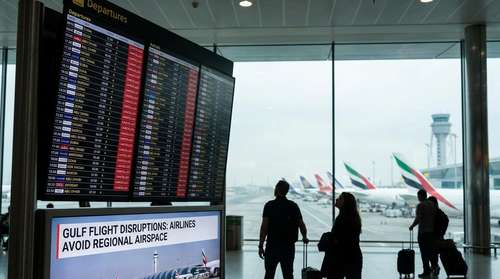
The agonizing delays at security checkpoints are unfortunately only half the battle. Airlines are simultaneously grappling with an unprecedented airline jet fuel price surge. Following severe geopolitical disruptions and closures in the Strait of Hormuz, jet fuel costs skyrocketed from $2.17 to $4.57 per gallon in just three weeks. This doubling of operational costs is putting immense pressure on carriers, prompting capacity cuts and compounding the US government shutdown flight delays across the board.
United Airlines has already preemptively slashed roughly 5% of its late spring and summer flight capacity, suspending marginal routes like midweek red-eyes. This capacity reduction is a nightmare for stranded passengers. When an hours-long security wait forces a missed connection, the lack of available backup seats means travelers are stuck sleeping in terminals. Furthermore, travelers navigating the Southwest Airlines delays 2026 operational shifts—including the carrier's recent transition away from open seating—are finding that rebooking canceled flights is harder than ever on a network operating with zero slack. The situation has even severely impacted regional carriers, with Republic Airways suffering the highest cancellation rates in the industry and facing renewed bankruptcy talks.
How to Survive Spring Break Travel This April
With no immediate fix to the structural deficits plaguing the aviation sector, passengers must adopt highly defensive travel strategies. The lethal combination of high fuel costs, reduced flight capacity, and TSA workforce depletion leaves little room for error.
Aviation experts recommend arriving a minimum of three hours before domestic flights at major hubs, and up to four hours for international departures. If you have access to programs like TSA PreCheck, use them—though travelers should be aware that consolidated checkpoint lanes occasionally force PreCheck members to merge with standard lines during peak staffing emergencies. Keep a close eye on airline alerts, continuously monitor local checkpoint dashboards before you leave for the terminal, and know your passenger rights. Until the political dust settles and the security workforce fully stabilizes, expecting the unexpected is your best defense against the current travel crisis.