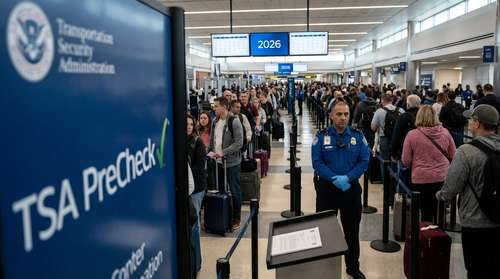
The American travel landscape is bracing for a massive shockwave following newly released Department of Homeland Security documents detailing sweeping TSA budget cuts 2026. The White House has officially proposed eliminating more than 9,400 Transportation Security Administration (TSA) jobs and slashing just over $1.5 billion from the agency's funding. Coming during one of the busiest periods on record for commercial aviation, this sweeping directive has airlines, union leaders, and passengers raising alarms over the potential for historic delays and heightened security vulnerabilities.
The Scope of the Proposed TSA Officer Layoffs
According to the budget framework released this week, the proposed $1.5 billion reduction represents roughly a 20% slash to the agency's $7.8 billion budget. To achieve these unprecedented financial rollbacks, the administration is targeting the TSA's approximately 60,000-person workforce. The proposed TSA officer layoffs are split across two primary strategic shifts: the privatization of smaller regional hubs and significant internal restructuring.
Privatization at Smaller Airports
President Donald Trump has directed smaller airports across the country to drop federal screeners and transition entirely to private security firms. The administration framed this as a necessary first step toward broader privatization of the agency, which was originally established in the aftermath of the September 11, 2001 attacks. By removing federal security operations from these regional outposts, the White House estimates a payroll reduction of more than 4,500 jobs.
Efficiency Mandates and Redundancy Elimination
Beyond the shift to private contractors, the remaining workforce reductions will happen internally. The TSA itself has proposed eliminating another 4,800 positions through what the administration describes as efficiency improvements. A major component of this strategy involves ending the practice of physically staffing airport exit lanes—reassigning over 800 posts alone to save roughly $97.3 million—alongside consolidating overlapping administrative and operational redundancies. These specific employee cuts are expected to save the federal government well over $500 million annually.
Investing in Automated Security Technology
To offset the staggering loss of human capital, the budget allocates targeted funds for technological upgrades. The administration has requested $225.9 million for deploying Computed Tomography (CT) machines to enhance automated baggage screening, alongside $48.1 million to replace outdated screening systems. Additionally, a $20 million investment in self-service e-Gates aims to streamline ID checks and double passenger throughput. The White House insists that these automated systems will reduce person-to-person interactions and mitigate the impact of reduced physical airport security staffing.
Trump Administration Travel News: The Push for Privatization
The latest Trump administration travel news reflects a longstanding skepticism toward the current federal aviation security apparatus. President Trump has been openly critical of the agency since retaking office, notably removing former TSA Administrator David Pekoske on his first day in 2025 and holding off on nominating a permanent successor. The administration argues that despite consistent funding increases over the past two decades, the agency has repeatedly failed internal audits and relied on intrusive screening protocols that violate American privacy.
However, the move faces fierce pushback from labor organizations. The American Federation of Government Employees (AFGE), the union representing thousands of security screeners, strongly opposes the privatization push. Union representatives warn that fragmenting US aviation security funding and shifting the burden to private entities could fracture the unified security protocol that keeps domestic skies safe, ultimately weakening aviation defense.
How Reductions Will Impact Airport Wait Times Today
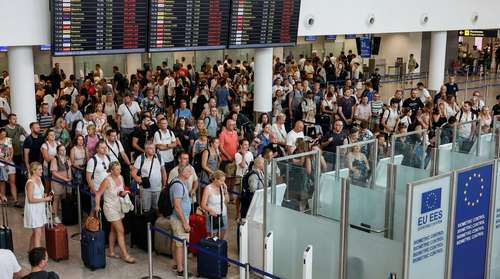
Travelers navigating major hubs are already feeling the strain of federal funding disputes. Recent congressional standoffs regarding Department of Homeland Security funding have resulted in missed paychecks, prompting a wave of call-outs among frontline officers. Due to these ongoing disruptions, the agency has already bled more than 1,600 workers over the past year. When you look at airport wait times today, the friction is palpable, and industry analysts warn that further draining the workforce by 9,400 positions will push the system to a breaking point.
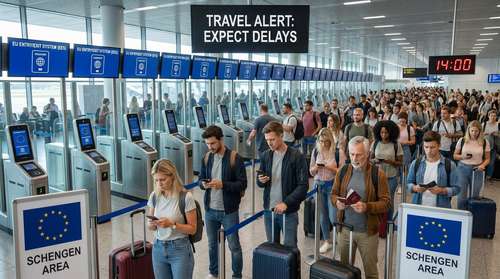
The situation puts the travel industry impact squarely in focus. Federal data shows that the TSA screened a record-breaking 904 million passengers in 2024, with volumes continuing to climb steadily into 2026. Airlines like Delta, American, and United are heavily dependent on fluid security checkpoints to maintain strict flight schedules. Stripping 20% of the agency's budget during an era of record passenger volume practically guarantees massive bottlenecks at screening checkpoints, forcing travelers to arrive hours earlier than previously recommended.
Looking Ahead: The Legislative Battle for Funding
The fight over the agency's survival now heads to Capitol Hill. Congress is slated to hold intensive hearings on the White House budget request later this month. Lawmakers face a tight deadline to forge a new budget agreement ahead of the September 30 fiscal year deadline, and the debate surrounding privatization is expected to be highly contentious.
For now, the American traveler is caught in the crossfire. As the debate over privatization and fiscal responsibility rages in Washington, passengers should brace for a turbulent summer at the checkpoints. Whether these proposed overhauls will streamline a bloated agency or cripple the nation's air travel infrastructure remains a fiercely debated question.